Fire extinguishers
Fire Extinguisher Regulations in South Africa: A Complete Guide for Businesses
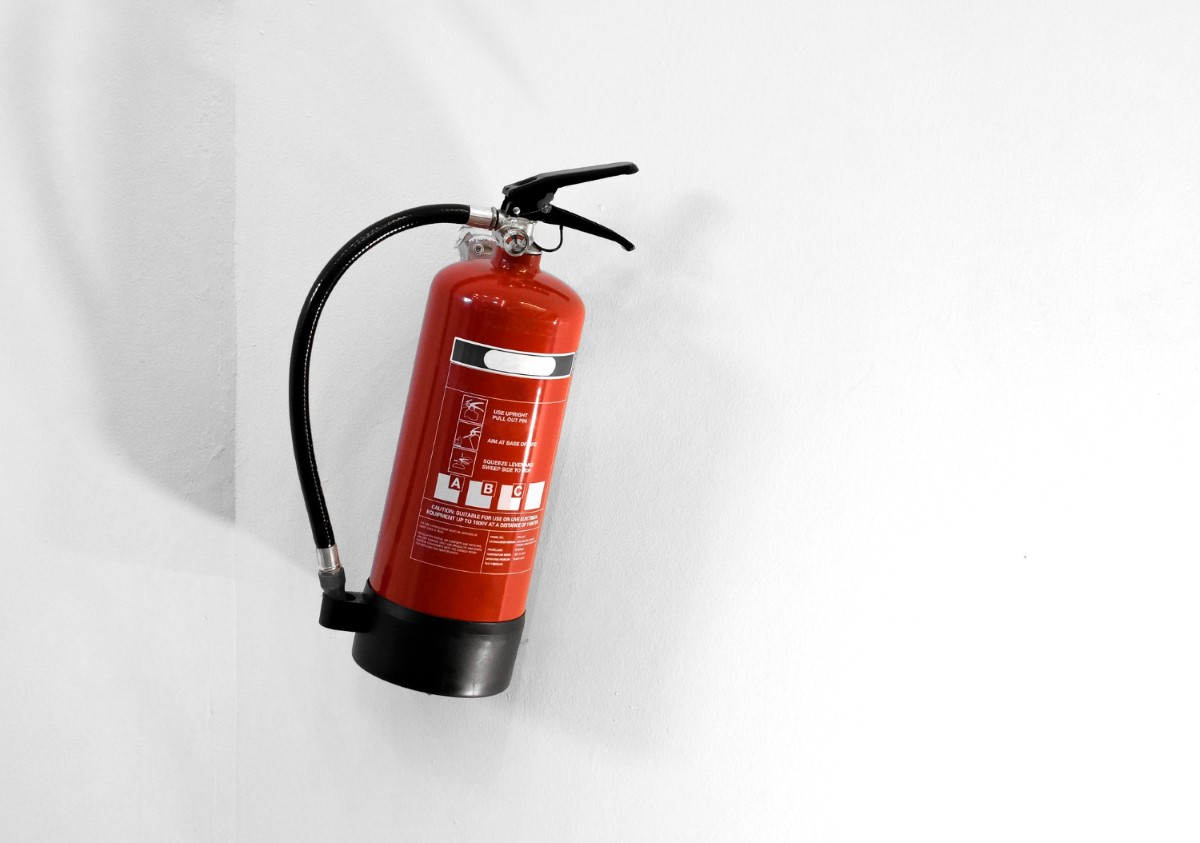
South African businesses need fire extinguishers that suit their hazards, are accessible, and are kept in working condition. Compliance involves workplace law, the building’s approved fire-protection arrangements, applicable standards and local requirements. A recently serviced extinguisher does not, by itself, establish that the building is compliant.
For a business owner, the useful question is not simply “Do we have extinguishers?” It is “Can we show that the correct equipment is in the correct place, maintained by the right people, and supported by an effective emergency response?” This guide explains how to build that evidence without assuming that every office, restaurant and warehouse needs the same installation.
What laws apply to fire extinguishers at work?
General Safety Regulation 13J addresses workplace fire precautions and escape. Pressure Equipment Regulation 19 governs specified work on fire extinguishers. These sit alongside the building-control framework and relevant municipal rules.
The 2025 General Safety Regulations amendment requires suitable firefighting provision and maintenance, taking the workplace and its hazards into account. Older web guides often cite regulation 9 of the Environmental Regulations for Workplaces; use the updated regulation 13J reference when checking your workplace compliance file.
Building fire protection is broader than portable equipment. It includes escape, fire and smoke spread, structural performance and provision for firefighting. A competent designer must establish the applicable compliance route for the premises. The municipal reference copy of SANS 10400-T listed below is a 2011 edition: it is background to that framework, not a basis for applying old numerical design tables to a new project.
Is a SANS standard the same thing as a law?
No. A standard is a technical document. Its requirements can become binding through legislation, an approval, a contract or another applicable instrument. Ask which document makes a particular requirement applicable to your site.
| Source of requirement | What it means for the business |
|---|---|
| Legislation and regulations | Legal duties that apply within their defined scope. |
| Applicable SANS standards | Technical provisions for the relevant equipment, installation or work. |
| Municipal approval and conditions | Requirements linked to the premises, use or local regulatory process. |
| Insurance and lease conditions | Contractual obligations that may add to statutory duties. |
| Management recommendations | Practical ways to organise checks, records and corrective action. |
The management tools in this guide are recommendations unless a legal or standards source is expressly identified. They help organise compliance; they do not replace a site-specific design.
Which fire-extinguisher standards should a business know about?
Ask your provider to identify the applicable edition and scope of each standard in the quotation or report. The main references to discuss are:
- SANS 10400-T: the building fire-protection framework and the relationship between the building’s use and its protection.
- SANS 10105-1: selection, installation and maintenance of portable and wheeled extinguishers.
- SANS 1475-1: reconditioning of portable and wheeled rechargeable extinguishers.
- SANS 1186-1: symbolic safety signs.
Hose reels, hydrants, detection and suppression systems have their own relevant references. A contractor should not describe every kind of fire-safety work as “SANS 1475 compliant”. SAQCC Fire’s registration disciplines distinguish equipment servicing, detection and gas suppression.
How many fire extinguishers does a business need?
The answer depends on occupancy, floor layout, hazards and the applicable fire-protection design. A floor-area calculation alone is not a complete assessment.
Before accepting a quantity, ask the designer or supplier to record the building use, each storey or separate area, relevant fire hazards, proposed extinguisher ratings and access arrangements. The rating matters as well as the cylinder size. A product described only as “a 4.5 kg extinguisher” is not a complete specification.
Consider a small office attached to a workshop. The office’s paperwork, the workshop’s substances and machinery, and a separate electrical room may create different selection questions. Buying three identical units because they are on special does not explain how those hazards are covered.
Do not apply an internet rule such as “one extinguisher per 200 square metres” to every business. Have the applicable calculation and placement shown on a plan, including any additional protection for specific hazards.
Where should fire extinguishers be positioned?
They need to be identifiable, reachable and located so that people are not forced towards a fire to collect them. Exact installation details must follow the applicable design and standard.
For a practical management check, walk the premises as a visitor would. Can you see the equipment or its sign? Can you reach it without moving furniture? Has a new display or pallet stack hidden it? Will an opened door cover the station? Can a person leave the area without passing the developing hazard?
Ask the installer to verify mounting, signage, travel routes and any weather protection. Do not relocate an extinguisher to improve the appearance of reception without checking what area it protects. Photograph the agreed position and identify it in the equipment register.
How often should fire extinguishers be serviced?
Plan for professional servicing at least annually as the normal baseline, with earlier attention after use, damage, suspected leakage or other defects. Confirm the applicable schedule for each extinguisher with the service provider.
Annual procurement is reflected in the NRF’s 2026 maintenance specification. Some municipalities expressly prescribe a 12-month interval; eThekwini’s section 31 is one example, not a rule to apply automatically in another municipality. The applicable SANS 1475-1 provisions, manufacturer’s instructions and site conditions must be checked for the actual equipment.
Routine visual checks between services serve a different purpose. Set a documented inspection routine with your provider; a monthly management check is a useful starting point to discuss. Increase attention where equipment is exposed to impact, tampering or a corrosive environment. This visual check is not permission to open, refill or repair the unit.
A service date, recharge date and cylinder-test date are different records. Do not assume every extinguisher must be refilled at each visit, or that every cylinder type has the same test interval.
Who is allowed to service a fire extinguisher?
Pressure Equipment Regulation 19 requires the specified work to be done by an authorised person employed by a permit holder. The official guidance to regulation 19 covers filling, recharging, reconditioning, modification, repair, inspection and testing.
Before appointing a provider, verify the individual and company through the appropriate records. Use the SAQCC Fire verification facility, confirm the relevant work category, and request the company’s applicable permit evidence. A training attendance certificate or a logo on a vehicle is not enough to establish the scope of authorisation.
Ask who will perform any off-site cylinder testing and what evidence will come back. If equipment must be removed, agree suitable temporary protection before the visit.
What records should the business keep?
A practical equipment register links each unit to a location and a history. Ask for records that allow you to distinguish completed work from outstanding defects.
- Asset number, location, extinguisher type, rating and identifying details.
- Inspection observations and the person who recorded them.
- Service dates, technician details and the work performed.
- Recharge, test or replacement records where relevant.
- Next due dates and the source of the maintenance schedule.
- Defects, temporary arrangements and evidence that repairs were completed.
For example, “six units serviced” does not tell a property manager whether the warehouse unit failed inspection. A location-by-location report does. Keep the defect report alongside the invoice rather than filing the invoice as if it closes every issue.
What should businesses in Gqeberha check locally?
For premises in Gqeberha (Port Elizabeth), check the applicable Nelson Mandela Bay fire-safety requirements and any written conditions on your premises. The gazetted 2007 by-law addresses extinguishers and protection systems; the municipality’s adopted 2023/24 IDP identifies the 2007 Fire Safety by-law among its gazetted by-laws. A separate 2019 document online is marked as a draft.
Ask the municipality to confirm the current requirements for your address, occupancy and proposed changes. This is particularly useful when taking over a building or changing a shop into a restaurant. Do not assume an earlier occupier’s paperwork covers the new activity.
Does an extinguisher certificate prove full fire compliance?
No. It documents a defined activity or equipment scope. It does not automatically certify escape routes, occupancy, the building design or every other fire system.
Read what the document covers, who issued it, the date, any exclusions and any unresolved findings. Keep municipal approvals, installation documents and equipment maintenance evidence as distinct records. If an insurer requests a particular document, obtain written clarification of exactly what it requires.
A practical first review
- Collect the approved plans, existing equipment register and latest service reports.
- Walk the premises and mark missing, obstructed or damaged equipment.
- List changes in use, machinery, cooking, storage or layout.
- Ask a suitably competent provider to reconcile the installation with those risks.
- Assign each corrective action to a person and check it has been completed.
If you manage a commercial property in Gqeberha, discuss the scope of your existing equipment and documentation with Aspigon Fire through its installation, servicing and upgrade service. Explain the building’s use and any changes so that the appropriate inspection or specialist input can be identified.
Frequently asked questions
Can the landlord handle everything?
A lease can allocate work and costs, but do not assume it removes the employer’s own duties. Record who arranges servicing, controls shared areas and closes defects, then verify that the work happens.
Does a green pressure gauge mean an extinguisher is compliant?
No. A gauge reading does not establish correct selection, access, cylinder condition, service status or the condition of every component. Some extinguisher types do not use that kind of gauge.
What if an extinguisher was only used briefly?
Report the discharge and arrange assessment and restoration by an authorised provider. Do not return it to its station as ready for use merely because it still feels heavy.
Can staff tackle any fire if an extinguisher is available?
No. Raise the alarm and prioritise evacuation. Only trained people should consider tackling a small developing fire when the correct equipment is available and a safe escape remains open. Leave immediately if conditions are unsafe.
Sources and further reading
- General Safety Regulations amendment, GN 5954 (2025), regulation 13J
- Department of Employment and Labour: Pressure Equipment Regulations guidance, regulation 19
- SAQCC Fire: registration verification and standards disciplines
- SANS 10400-T:2011, municipal reference copy including National Building Regulations Part T
- National Research Foundation: 2026 fire-equipment service specification (an example of annual procurement, not national legislation)
- eThekwini Fire Safety By-law 2022, section 31 (applicable in eThekwini)
- Nelson Mandela Bay: gazetted Fire Safety By-law (2007)
- Nelson Mandela Bay: adopted 2023/24 IDP, gazetted by-laws table
Sources checked 18 September 2026. Requirements must be applied to the actual premises, equipment and current applicable documents.